You Need a Superzoom Lens | Tony & Chelsea
Tony & Chelsea Review and Demonstrate Superzoom Lenses
Superzoom lenses have a massive focal length from wide-angle to super-telephoto. They let you keep ONE LENS on your camera for almost anything - never have to stop and dig through your bag to change lenses. In fact, leave your backpack at home, because with a superzoom lens you need only your camera, one lens, and a strap on your shoulder.
Tony & Chelsea Northrup review and demonstrate superzoom lenses, using the Tamron 18-300mm (for Sony or Fujifilm) and the Tamron 28-200mm (for Sony). They'll talk about the benefits compared to your kit lens or your smartphone (specifically sharp details on faraway subjects such as wildlife), as well as how to get the best portraits, landscape and travel photos.
VIDEO TRANSCRIPT
Chelsea: I'm shooting wide angle at 18mm. What are you doing?
Tony: I'm changing my lens.
Chelsea: I'm at 300mm to get the details. What are you at?
Tony: I'm looking for my lens.
Chelsea: I can get the entire thing in the frame at 18mm. What do you got?
Tony: I'm looking for my lens cap.
Chelsea: If you are always looking for your lens, you're probably going to want to superzoom; you can do it all with one lens.
Tony: Okay, real world stuff here: I am a huge pixel peeper. I love super sharp prime lenses, but when we're on vacation together, it is so annoying when I have to stop and change lenses. And I've only recently begun to appreciate the superzoom category of lenses. These are lenses that go from, like, wide angle to super telephoto; they are the one lens you can keep on your camera all the time.
Chelsea: They're what your kit lens wants to be, but just cannot measure up to.
Tony: Most people, when they buy a camera, they just want one lens. And most people want something that'll take better pictures than their smartphone, but guess what? The kit lens that you got probably isn't much better at all, and it certainly doesn't do super telephoto well for things like sports, wildlife, or just isolating little details in nature.
Chelsea: What are these lenses, Tony?
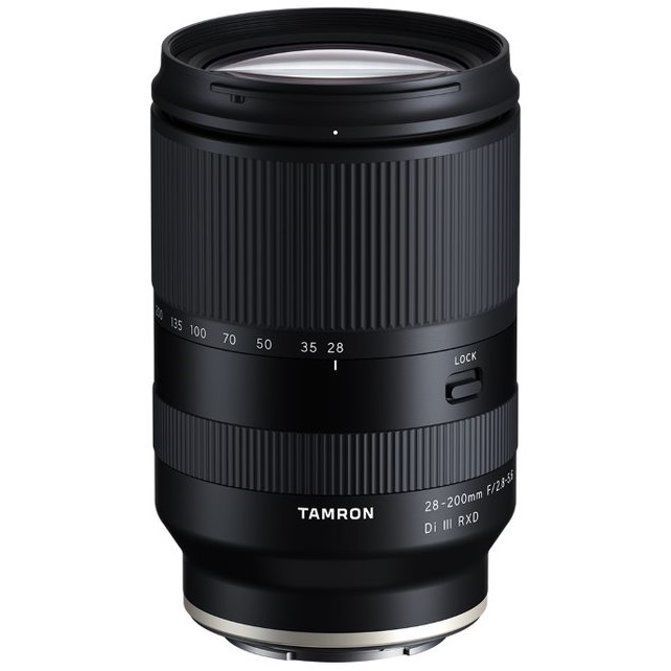
Tony: I have the Tamron 28-200mm for full frame Sony—and you have...
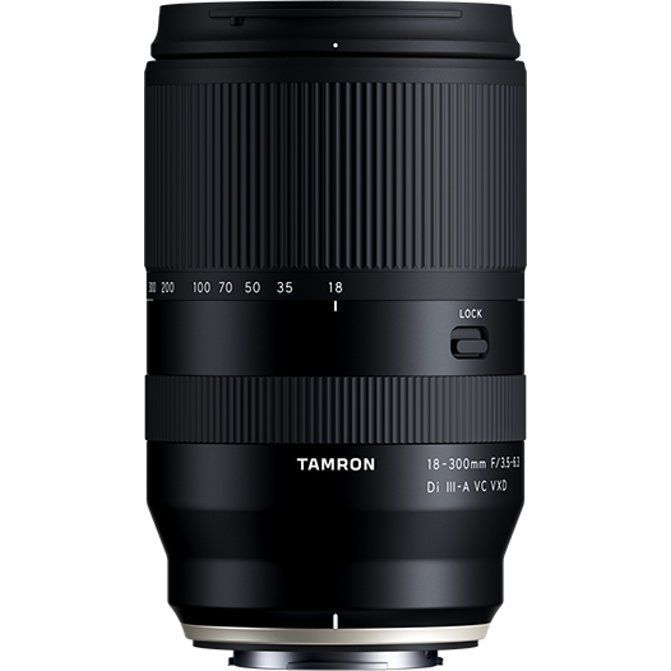
Chelsea: ...the 18-300mm for APS-C sensor Sony and Fujifilm. What we're talking about is a genre of lenses called superzooms that go from wide angle to very telephoto. We're going to tell you why they're versatile and what instances you'll want them, and show you side-by-sides with your kit lens—which is probably not up to snuff for everything you want to take pictures of—and also our iPhone so you can see how much better the image quality is when you're using a specific lens like this.
Tony: If this sounds good to you, you should check out milfordphoto.com. Milford is a different type of camera store: they're a small camera store, they're our local camera store, and if you're in Connecticut, go in and talk to the really nice people there. Ask for Rich.
Chelsea: I like Rich!
Tony: He can help you pick the right gear without having to watch 100 videos and return stuff later.
Chelsea: Go down to the description below, click on the link, check them out, shop around. These two lenses are there so you can buy them.
Tony: Let's take a walk and take some pictures.
Chelsea: Okay. I'm not going to pixel peep with these lenses because that's not the point; it's not about being the sharpest lens, it's about being extremely versatile. I have 28-200mm here. That means I can go wide angle for landscapes, or zoom in and get more details, or do a more compressed portrait shot. So I'm going to go wide angle, I'm going to zoom in, and you can see the versatility of this lens in a scenario like this. You can see I was able to capture the expansive beauty of this landscape, but also there's this really cute red hut on the horizon, and at 200mm, I was able to zoom in, isolate it, and get a nice shot of that as well. Now you can see how these pictures compare to just the kit lens that comes with your camera—it's much better. And I'll also use what a lot of people are using: an iPhone. This is the newest one, the 14 Pro, so they'll be especially sharp, and let's see how it compares. This situation reminds me of so many times when I've been traveling and I come upon something I didn't expect I would want to take pictures of. Would this get as sharp a shot as a prime that I planned on taking? No. But also, I'd be able to at least get a photo that was good quality. The best? No. But I'd get the shot, and that's better than nothing at all.
Tony: So those are the strengths, but there are some limitations too. The first: they're not as wide on the wide end as your smartphone would be—like, my iPhone goes to, I think, 13mm—but that's an easy workaround if you can shoot a panorama. And I'll show you how: if I'm taking a horizontal picture, I'll just switch and take a vertical picture, and then I'll take picture, picture, picture, picture, overlapping by about one-third until I capture the entire scene. Then I can import them into Lightroom and, with a couple of clicks, combine them back into a single super wide angle, high megapixel picture for way better results than I could get with my smartphone. The other limitation is shooting in low light and dark environments. These are not fast lenses; they don't have a big wide aperture like you would get out of an f/1.4 prime, and that means that in low light, they're going to be noisier. But if you know the rule of doubles, then you'll take a lot of shots in continuous shooting mode with longer and longer shutter speeds until you get the best possible handheld results. And because all these superzooms are stabilized, you can really handhold for a long time. Superzooms can also be amazing for portraits. Now, my day-to-day portrait lens is a very expensive, like, 85mm f/1.2 or 50mm f/1.2. That low f-stop number, f/1.2, indicates it opens up really wide to let in lots of light and really blur the background. You can't do that with a kit lens, but you actually can do it with a superzoom. Here's what you do: you zoom in all the way, and because they have a lot of reach, that will let you blur the background even though you have an f-stop number of, like, f/5.6 or f/6.3. I'll show you.
FEATURED LENSES
TONY & CHELSEA'S RECOMMENDATIONS
Sony APS-C cameras (such as the α6000, α6100, α6400, α6500, α6600):
Tamron 28-200mm F2.8-5.6 Di III RXD for Full-Frame and APS-C Sony Mirrorless
Sony full frame cameras (such as the α7 III, α7 IV, α7R III, α7R IV):
Tamron 18-300mm F3.5-6.3 Di III-A VC VXD (Model B061) for Sony E
Fujifilm X-mount (such as the X-T4, X-H1, X-H2, X-T5, X-T3, X-T30):
Tamron 18-300mm F3.5-6.3 Di III-A VC VXD (Model B061) for Fujifilm X
Canon RF cameras (such as the R, RP, R5, R6, R3):
Canon RF 24-240mm F4-6.3 IS USM
Nikon DX mirrorless cameras (Zfc, Z50):
Nikon NIKKOR Z DX 18-140mm f/3.5-6.3 VR
Nikon Z cameras (Z5, Z6, Z7, Z9):
Nikon Nikkor Z 24-200mm f4-6.3 VR
Olympus cameras (OM-1, EM-1, EM-5, EM-10):
Tony (voiceover): Even at a glance, the difference is obvious. The kit lens is only moderate telephoto, so it doesn't compress the facial features, just making them smaller and generally more attractive, but it also doesn't cast the background out of focus. Look at the background blur we get from that superzoom; even though this one's f/5.6, you can see it just completely blurs the kind of ugly location that we were in. Okay, but could a superzoom possibly be sharp at 200mm? Let's zoom in. Yeah, at 200mm the Tamron is so sharp, it's crazy. You can see every little eyelash, and that detail's just all lost on the kit lens. Tamron's APS-C 18-300mm blurs the background even more—look, it's just a complete wash. And if we zoom in, it's not quite as sharp as the 200mm full frame Tamron. Now, it zooms further—this is more than twice as far as the full frame 200mm lens—and like all superzooms, you're trading sharpness for versatility. So while it's more versatile, it's not quite as sharp. But still, especially for images that are destined for social media like Instagram, you would never notice the sharpness difference, but you would notice the extra compression of the facial features and that crazy bokeh.
Tony: Compared to a kit lens, it looks so much better. Okay, your smartphone can do some bokeh, but it's fake and looks a little ugly. And also, your smartphone can't trigger these lights. Big win for the superzooms.
Chelsea: If you're looking for a lens that can take pictures of your kids' sports, a superzoom is perfect for that. We're here at a kids' baseball field and Tony is somewhere over there on home plate; I'm near the bleachers. So I want to show you what a superzoom can do when you're taking pictures of your athlete versus the kit lens. So, first I'll do the superzoom. We have 300mm here, and let's see how close we can get.
Tony (voiceover): Look, here's the view you get of the batter with your kit lens or your smartphone, and this is the view you get with the superzoom—the 18-300mm in this case. But to be fair, you could crop with your kit lens, so let's crop them to the same view. So when your kid hits the home run, which of these two image qualities do you want? The superzoom here is just far better.
Chelsea: Another thing to consider that's nice about the superzoom is that if you need to zoom in far to get those close-up pictures of sports, you can do it. But if you're going to a pizza place after the game and you want to get wide-angle portraits, or you're in a close-quarters place and you still want pictures, you can zoom right back to 18mm and get those photos too without changing out your lens.
Tony: So we've sold you on the idea of a superzoom, but which one should you get? Today we have two Tamron lenses. This is the Tamron 18-300mm VC—for vibration control—and it's available for Fujifilm and Sony mounts, the Sony APS-C cameras. This is the Tamron 28-200mm, also with vibration control, and it is only for Sony E-mount. So if you have Sony or Fujifilm, I would pick up one of these. They both cost about $700. But if you'd rather get a name brand lens, that's an option too. Those name brand superzooms are available; they just cost you a little more. And if you have a different camera brand—Canon, Nikon, Olympus (OM System), whatever—there's certainly a superzoom available for it, and the people at Milford Photo can help you find it and make sure that you get the best one. So check out milfordphoto.com, or give them a call or send an email if you actually need help, because there are real human beings who can help you out there. Milford Photo is our local camera store here in Connecticut, and if you're in Connecticut, definitely stop by because you can actually talk to the people in person there and see everything. And shopping there in person is a fantastic experience, but if you're further away, you can order online and still get that same personal help—still get the benefit of not shopping at some big brand store where you're completely nameless. You can work with real people and help support a small business. That, and the unlimited customer support, is really something that I love about Milford Photo and why I always choose to shop there.
Tony: I think everybody needs a superzoom just so when you travel, you don't have to carry around a big bag, just so you don't have to be changing lenses, just so you can have one camera hanging around your neck—super convenient instead of using your smartphone.
Chelsea: I also think it's good for people who don't necessarily want to buy a lot of gear but shoot a lot of different things. You're taking portraits of your kids, or you're doing sports games, you're taking pictures of some wildlife in your backyard—you can do a little bit of everything without having to buy a bunch of lenses.
Tony: These Tamron lenses are fantastic, especially at only $700. But if you don't have a Sony or a Fujifilm, then find some superzoom that works for you and contact Milford—milfordphoto.com—and just ask them what lens they think is right.
Chelsea: Or you can go to their website and browse their inventory and find the right lens for you. If you can't figure out what that is, you can ask them—you can email them, you can call them. Thank you, Milford Photo, for being so great at what you do, for hiring such wonderful people that are helpful, and for sponsoring this video. And thanks to all of you for watching. I hope you enjoy your super zoom.
Tony: Don't forget to subscribe. Bye.
Chelsea: Bye. I'm gone.